
Food Delivery Website Templates, Compared
By Manob Editorial ·
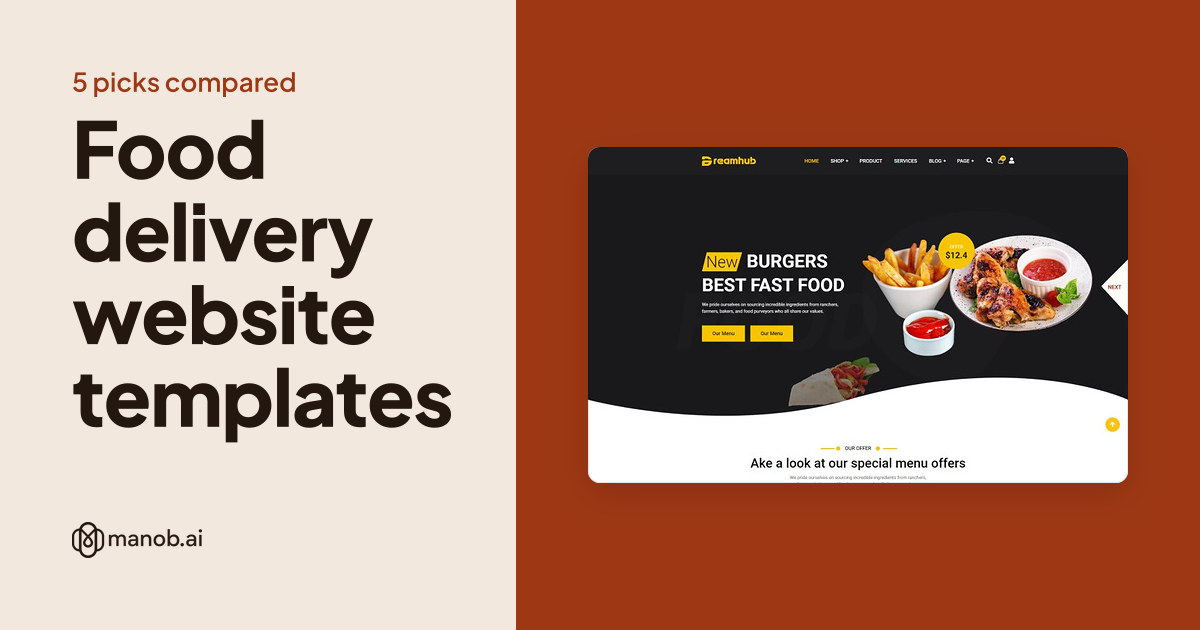
A food delivery website template gives a takeaway, delivery kitchen or grocery shop a menu, an order button and a delivery-area page without a custom build. We list five picks on Manob: Dreamhub and Restu as HTML templates, Restouns and Waterflo for WordPress, and Organeat for Shopify. A template shows the pages. Ordering, payments and driver tracking still need a plugin, a store platform or custom code.
A food delivery site has one job: get a hungry customer from the homepage to a placed order in as few taps as possible. Most templates on Manob are built for that front end. They look right and read well on a phone, but they are not full ordering systems. Treat each one as a design you can fill with your menu, then add the ordering tool that fits how you take money.
How we picked these five
Manob lists more than 600 products, and a search for delivery returns many general restaurant and grocery themes. We kept only the products whose names point at food ordering, delivery or a grocery store. Only five fit well enough, so this list is short on purpose. Every product on Manob is reviewed by hand before it is approved, and each one has a preview you can open before you buy.
What a delivery website needs
A delivery site needs four things above the fold: the menu or product range, a visible order button, your delivery area and your opening hours. Below that, it needs a contact route for large orders and a short note on allergens or minimum spend if you use them. When you open a demo, check those four items on a phone first. If the order button sits below two screens of banner, the template will cost you orders.
Can I take online orders with a food delivery template?
Not on its own. A template gives you the menu, the order button and the layout around them. The cart, payment and order routing come from a plugin, a hosted ordering service or custom code. Choose the ordering tool first, then pick the template whose layout works with it. Switching ordering tools later is much harder if the template was built around one of them.
Which template fits which business?
Dreamhub Fast Food and Delivery is an HTML5 template for quick-service brands such as burger, pizza or chicken shops that want a static site. Restouns is a WordPress restaurant and food theme, so you can update the menu yourself from the dashboard. Restu is an HTML template for restaurant and food businesses that do not need a content management system. Waterflo is a WordPress theme for bottled drinking water delivery, a good starting point for a regular-delivery round. Organeat is a Shopify theme for food and grocery stores that already sell, or plan to sell, through Shopify.
| Template | Type | Built with | Price from | Live demo |
|---|---|---|---|---|
| Dreamhub Fast Food & Delivery HTML5 Template | HTML template | — | $23 | Demo |
| Restouns - Restaurant and Food WordPress Theme | WordPress theme | Elementor | $41 | Demo |
| Restu – Restaurant & Food HTML Template | HTML template | — | $29 | Demo |
| Waterflo - Bottled Drinking Water Delivery WordPress Theme | WordPress theme | Elementor | $41 | Demo |
| Organeat - Food and Grocery Shopify Theme | Shopify theme | — | $44 | Demo |
WordPress, HTML or Shopify?
Choose WordPress if you or your staff will change the menu every week and want to do it without a developer. Choose HTML if you want a fast static site that you can host almost anywhere and rarely edit. Choose Shopify if your main job is selling groceries or packaged food with a cart and stock levels. Our HTML5 templates guide explains what hosting a static site involves.
Do I need a grocery store template or a restaurant template?
Pick a grocery template if you sell a catalog of products with prices, weights and stock. Pick a restaurant template if you sell a short menu of dishes, with categories and daily specials. Many shops start with a restaurant layout and add product pages later, but a catalog with dozens of items fits a store theme better. Our restaurant website templates guide covers the dining side in more depth.
Where these templates fall short
- No built-in ordering. None of the five is a delivery platform. Plan the ordering tool, the payment provider and the order email before you pick a design.
- No driver or area tracking. If you run your own riders, you need a route or dispatch tool. A template can show a delivery-area map, but it will not plan routes.
- Thin category coverage. Only five products matched well, so you may not find a template for every niche. A general restaurant theme with a plugin can cover what these miss.
- Demo content is not your menu. Plan photos and descriptions for each dish before launch. Placeholder food photos make a site look unfinished.
Browse every site template on Manob if none of these five fits. If you want to compare WordPress restaurant designs in more detail, read our WordPress restaurant themes roundup, and follow the customization guide once you have chosen.
Licensing for a food business
A shop that builds its own site normally needs the Regular License. Building sites for restaurant clients means one license for each client site, because each site is a separate end product. The Extended License applies when the end product charges its own users. Check the licenses page before you buy, especially if you plan to sell a site template to clients.
Frequently asked questions
Do food delivery website templates include online ordering?
Usually not. Most templates give you the menu pages, the order button and the layout. The cart, checkout and order routing come from a plugin, a hosted ordering service or custom code. Ask the seller or read the product preview to see what the demo includes before you buy.
Which is better for a takeaway, WordPress or HTML?
WordPress is better if you will update the menu often and want to do it yourself. An HTML template is better if you want a static site with no database to maintain. Both work for a takeaway. The deciding question is who will edit the menu after launch.
Can a grocery store use a food delivery template?
Yes, if the store sells a small range and you do not need a full catalog. For a store with many products, prices and stock levels, a Shopify grocery theme such as Organeat is a closer fit than a restaurant layout.
Do I need a developer to set up a food delivery template?
Not for the pages and menu. Installing a WordPress theme and editing text and images is a task most owners can do in an afternoon. Connecting ordering, payments and delivery-area rules usually needs a developer or a tool with setup support.
Can I use one template for several restaurant clients?
Not under one license. The Regular License covers a single end product, so each client site needs its own license. Read the licenses page to confirm which license applies if a client site takes payments from its customers.
Are there free food delivery website templates?
Free templates exist on open directories and in the WordPress theme library. Every product on Manob is a paid template with a reviewed preview, so you can judge the design before you pay. Free templates often need more work on code, security and support.
Is a template enough for a delivery business?
A template is enough for a brochure site that takes orders by phone or by a linked ordering page. Once you need live stock, driver dispatch or accounts for regular customers, you need an ordering platform or a custom build on top of the template.